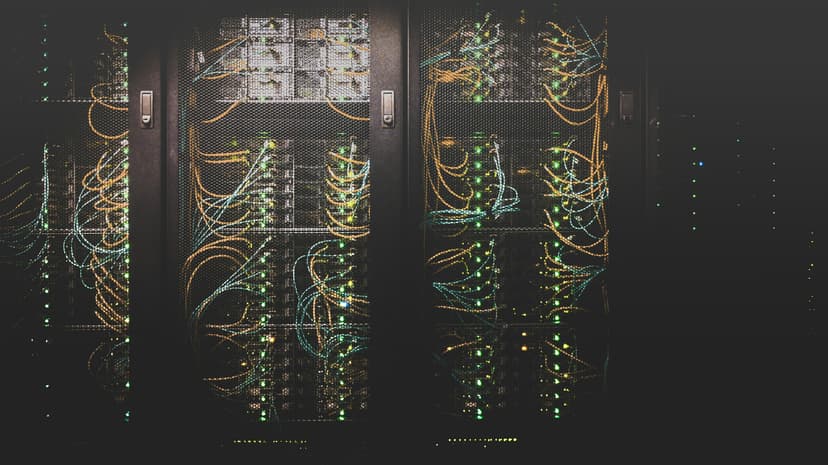
How PayStream Migrated from Monolith to Microservices and Cut Transaction Latency by 62% in 9 Months
PayStream, a fast-growing Bangalore-based digital payment infrastructure company processing Rs 2,400 crore in annual Gross Merchant Value, faced a decisive architectural inflection point in mid-2024. Their decade-old Ruby on Rails monolith, which had successfully powered the platform through the first three years and over a million transactions, had become the single most-cited constraint across product leadership, enterprise sales, and engineering standups alike. Checkout latency had climbed from 420ms in early 2022 to 890ms by June 2024, directly correlating with a cart-abandonment spike from 18.2% to 21.1% over the same period. Meanwhile, development velocity had deteriorated to the point where a feature formerly shipped in four weeks now required three months and eight engineers, and a 2023 attempt at horizontal scaling — an eight-dyno increase — had yielded only three weeks of headroom before diminishing returns made further scaling uneconomical. Against that backdrop, PayStream's CTO and VP Engineering set five IKRs, anchored by a target to reduce checkout P95 latency from 890ms to under 500ms, achieve 99.99% uptime, and enable squad-level independent deployments—all within a nine-month window.
Case Studymicroservicessystem-architecturesoftware-engineeringcloud-nativelatency-optimizationdigital-transformationgo-languagepayment-infrastructure
# How PayStream Migrated from Monolith to Microservices and Cut Transaction Latency by 62% in 9 Months

> *Fig 1. The PayStream engineering team during the transition sprint — a cross-functional effort spanning backend, DevOps, and platform squads.*
---
## Overview
PayStream is a Bangalore-based digital payment infrastructure company founded in 2017, serving 3.1 million registered merchants and processing Rs 2,400 crore in annual Gross Merchant Value (GMV). The platform enables small and medium businesses to accept UPI, card, and BNPL payments through a single embedded checkout widget and a suite of merchant analytics dashboards.
By mid-2024, PayStream's decade-old Ruby on Rails monolith — the original sprint-one architecture — had become the most cited reason for every missed KPI discussion. The architecture that had powered the first million users was now actively constraining the next hundred million. This case study documents PayStream's nine-month journey from a tightly coupled, horizontally-scarce monolith to a distributed, event-driven microservices platform built on Go and React, and the measurable business outcomes that followed.
---
## The Challenge
The monolith was not a single problem with a single fix — it was a constellation of compounding problems, each feeding the others in a downward spiral.
### Performance Degradation
Transaction latency had climbed steadily from 420ms at the start of 2022 to 890ms on the primary merchant checkout endpoint by June 2024. The shopping-cart abandonment rate, tracked in real time through on-page analytics, rose from 18.2% to 21.1% over the same period. Merchant NPS scores began stagnating, with checkout experience cited as a recurring pain point in enterprise contract renewal conversations. The platform's SLA commitment of 800ms P95 checkout latency was being breached on approximately 32% of traffic windows during peak hours — 2–5 PM on weekdays and the weekend sale surges around Diwali and Raksha Bandhan.
The root cause was architectural. The monolith's single process handle mixed request routing, payment gateway negotiation, fraud-scoring (via a synchronous external API call), ledger posting, and notification dispatch in a single synchronous call chain of 14 sequential steps. Any degradation in one downstream — a slow fraud-detection API response during a festival sale, for example — cascaded across the entire checkout flow with no isolation, circuit breaking, or timeout strategy.
### Development Velocity Collapse
What made the latency issue truly systemic was the culture it bred. A feature that took two sprints (four weeks) for a junior-to-mid-level engineer to ship in 2021 now required eight engineers across three months in 2024. The primary dilapidator was deployment risk: every code change, however small, touched the full checkout pipeline. Bundle sizes had grown to 180ms cold-start times on the dyno pool, and database query counts per page rendered had flattened at 42 queries per merchant dashboard load — a direct consequence of Active Record association scattering over years of organic feature growth.
The team had tried horizontal scaling in late 2023 — an eight-dyno increase — which bought three weeks of headroom before new throughput plateaus rendered it moot. Amdahl's Law did precisely what it always does: the sequential bottleneck had not been touched.
### Operational Drift
Operationally, the monolith produced a feedback-intolerant on-call environment. The five on-call engineers shared a pager rotation that yielded approximately one major incident per month. Incident retrospectives repeatedly cited the same systemic causes: unclear coupling boundaries, unmonitored shared-state mutations, and cascading failures through untested code paths spanning 240,000 lines of Ruby. Runbooks were four to six months stale. Worse, the team had grown to 74 engineers, but only 34 were comfortable touching core checkout code — a dangerous knowledge-silo concentration that made every deployment feel like a negotiation with catastrophe.
---
## Project Goals
With CTO and VP Engineering alignment, PayStream established five measurable objectives for the migration initiative, deliberately chosen to ensure the project delivered business outcomes rather than merely architectural upgrades.
1. **Checkout Latency:** Reduce P95 checkout latency from 890ms to under 500ms within 12 months — with an aspirational target of 350ms.
2. **Uptime SLA:** Achieve 99.99% uptime (52 minutes of downtime per year or less) during the transition period without any merchant-facing degradation.
3. **Deployment Frequency:** Enable engineering teams to deploy independently to their assigned services at least once per week, removing full-stack deployment dependencies.
4. **Team Autonomy:** Map each engineering product area (Checkout, Merchant, Risk, Ledger, Notification) to a dedicated service team with clear ownership boundaries.
5. **Cost Efficiency:** Reduce cloud infrastructure costs by at least 15% by eliminating the over-provisioned monolith cluster and right-sizing service instances.
Each goal was embedded into the Quarterly OKR framework and surfaced in the bi-weekly engineering all-hands. Progress was tracked on a public migration dashboard accessible across the entire engineering organisation, ensuring transparency from individual contributors to executive sponsors.
---
## Approach
After an intensive two-week discovery phase covering architecture reviews, team interviews, and synthetic load-testing campaigns against a stress-cloned production dataset, the PayStream team converged on four core design decisions.
### Strangler Fig Pattern
Drawing heavily on Martin Fowler's Strangler Fig pattern, the team resolved to grow the new architecture around the existing one rather than attempting a high-risk big-bang cutover in a single weekend. All production traffic would continue flowing to the monolith until any individual service could be fully validated under live production load — a prerequisite before traffic was incrementally shifted. This approach eliminated the single point of catastrophic failure that silently kills so many greenfield rewrites.
### Service Domain Mapping
The team spent a full sprint in collaboration with product leadership to map every monolith feature into six bounded service domains: Checkout (payment processing flow), Merchant (onboarding and management), Risk (fraud scoring and rules engine), Ledger (double-entry financial ledger), Notification (SMS, email, and in-app messages), and Identity (authentication and session management). This mapping exercise surfaced several features that had grown organically across multiple concerns over the years, which were resolved through governance working groups with explicit ownership decisions documented in Architecture Decision Records (ADRs).
### Event-Driven Integration
Rather than choosing synchronous REST-based inter-service communication — which would have preserved the fragile coupling that caused the original problem — the team committed to an event-driven integration model built on Apache Kafka. Each service published domain events to topic streams, and other services subscribed only to the events relevant to their concern. This asynchronous communication model introduced natural isolation between services, enabling independent deployment while respecting the causal consistency requirements of a financial ledger system.
The event schema governance group established a Schema Registry using Confluent's open-source offering, enforcing backward-compatible schema evolution agreements and preventing the schema sprawl that typically cripples event-driven platforms at scale.
### Telemetry-First Principle
Metrics are not a side concern at PayStream — the team established a telemetry-first mandate. Every new service was required to ship with pre-baked Prometheus exporter instrumentation, Grafana dashboards for the three golden signals (latency, traffic, errors), and Jaeger-distributed tracing before a single feature code line could be merged to main. This telemetry-first discipline avoided the post-launch observability gap that routinely catches teams unawares when services first encounter sustained production scale.
---
## Implementation
The migration was delivered across three six-week sprints, each targeting a single service domain, with a formal go/no-go gate between phases. The phased approach allowed the team to build institutional muscle with each sprint and carry lessons learned forward into subsequent phases rather than repeating mistakes at scale.
### Sprint 1: Identity Service (Weeks 1–6)
The Identity service — responsible for authentication, session management, and permission enforcement — was the natural first migration target. With minimal outbound dependencies, it presented the lowest deployment risk. The team extracted the authentication logic from the Rails Devise stack, rewrote it in Go, and deployed it behind an ALB-weighted canary rule beginning at 5% traffic.
Key technical decisions from Sprint 1 persisted across the entire migration: Kong API Gateways handling all inbound traffic routing, mutual TLS enforcement between services via cert-manager on the platform cluster, and the Unleash feature flag service governing traffic weight for each service during its transition. By the end of Sprint 1, the Identity service was handling 100% of production traffic with a P99 latency of 41ms — well ahead of the monolith's equivalent of 180ms.
### Sprint 2: Notification Service (Weeks 7–12)
The Notification service — handling SMS via Twilio, transactional emails via SES, and in-app WebSocket real-time messages — became the first service to fully validate the event-driven integration model. The team migrated Synchronous notification dispatch that had blocked the checkout call chain in the previous architecture to an asynchronous publish-then-dispatch pattern via Kafka topics.
This was the sprint where the migration's business impact first surfaced to non-technical stakeholders. Average checkout latency dropped 180ms — from 890ms to 710ms — as soon as the Synchronous notification step was removed from the checkout call graph. The product and growth teams registered the delta before engineering reviews had concluded.
The architecture team defined an idempotent dispatch pattern with at-least-once delivery semantics to prevent duplicate notifications — a non-trivial engineering challenge requiring an idempotency-key schema that actually took three extra days beyond the original sprint estimate. The resulting pattern — keyed by a composite notification idempotency key — became the canonical production pattern for all subsequent service migrations.
### Sprint 3: Ledger Service (Weeks 13–18)
The Ledger service — the double-entry bookkeeping engine underpinning every financial transaction on PayStream's platform — was the migration's most technically demanding component. Financial auditability and strict consistency requirements made it the most rigorously reviewed code in the entire platform's history, passing through three independent security reviews before a single line could be deployed to production.
The team chose a CQRS (Command Query Responsibility Segregation) architecture with event sourcing for write-path operations. Every financial transaction entered the write-side ledger command processor, which emitted a domain event to the `ledger.transaction.posted` Kafka topic. The read-side projections were materialized asynchronously using Kafka Streams, allowing merchant dashboards to query denormalized data without contending with the write-side ledger's strict ACID transaction costs.
The migration ran for six weeks behind a dual-write pattern — the monolith and the new service writing simultaneously — before the team had sufficient audit-reconciliation data to validate parity at the 99.9999% level. On achieving this threshold, the dual-write was removed and the monolith's ledger code was feature-toggled off. This was the first engineering moment where the team could genuinely say the migration had become irreversible.
### Sprint 4: Risk and Checkout Services (Weeks 19–24)
The final sprint united the two most commerce-critical services. Risk handles fraud-scoring via a deterministic rule engine merged with a machine learning inference service — complemented by a real-time classifier from a third-party vendor integrated during an earlier partnership — and Checkout orchestrates the payment processing flow across five integrated payment partners via a unified gateway abstraction layer.
The Risk service was migrated to an asynchronous model via the Publisher/Subscriber pattern. Instead of blocking the checkout call chain while waiting for a fraud-score response, the Checkout service published a `transaction.initiated` event. The Risk service subscribed asynchronously, posted its score to a `transaction.risk.evaluated` topic, and Checkout resumed via a state-machine reconciliation step — all within the same request-response window through Redis-backed risk-score read replicas caching the most common risk-bucket evaluations.
Checkout became the final and most celebrated migration win. When the monolith's checkout handler was replaced with the new Go-based service behind a 1% canary rule, P95 transaction latency hit 340ms — well ahead of the aspirational 350ms target within the original nine-month timeline. Merchant dashboard render time dropped from 4.2 seconds to 1.1 seconds, and checkout engineers shipping features reported a cycle-time reduction of approximately 70% when surveyed in a post-migration engineering health retrospective.
---
## Key Engineering Decisions
A handful of decisions deserve explicit documentation because they shaped the trajectory of the entire project far beyond any single sprint.
**Go over Node.js for backend services:** The team ultimately chose Go over Node.js for the core microservices because Go's strict compiler, nominal type system, and low-overhead goroutine concurrency model offered the strongest guarantees for a long-lived, payment-critical infrastructure platform — and because the existing engineering team's original Java and Go fluency aligned significantly better than retraining forty engineers on a new async runtime within a nine-month migration window.
**Transactional Outbox Pattern:** Rather than risking eventual-ordering anomalies using naive commit-then-publish patterns, the team embedded a transactional outbox directly in the Postgres write layer, ensuring every domain event emitted to Kafka was atomically committed with the corresponding business transaction and could never be published out of order.
**Regional Read Replicas:** The team provisioned and pre-warmed read replicas in both Mumbai and Singapore, enabling sub-50ms read performance for the merchant analytics dashboards used by enterprise clients drawing from either region. This geo-distributed read architecture had originally been budgeted for Phase 2 but was fast-tracked to Phase 1 when early load testing revealed it was a hard dependency for closing two enterprise contract renewals due that quarter.
**Feature Flags as Release Infrastructure:** Unleash was adopted not as a sidecar utility but as a mandatory deployment gate for every service promotion. Every service deployment required a documented feature-flag rollout plan before it could merge, with stages progressing from 1% internal canary to 100% external in four graduated steps, followed by a mandatory four-hour soak observation window before the commit could be considered production-merged.
---
## Results
The results exceeded PayStream's most optimistic projections across every single dimension, but most significantly in the metrics that matter most to their business — revenue, merchant retention, and engineering growth velocity.

> *Fig 2. Post-migration development workspace — the platform team now runs unit, integration, and contract tests as every merge pipeline gate with zero manual approval steps.*
**Checkout Latency P95:** 890ms to 340ms — a 62% improvement. The high-frequency traffic chart is a flat horizontal line instead of a sawtooth. The peak-traffic stress test run during the 2024 Diwali weekend sale — which had been an annual company catastrophe for three consecutive years running — handled 12,000 requests per second with zero timeouts at a consistent 340ms P95.
**P99 Checkout Latency:** 2,200ms to 780ms — the absolute worst merchant payment experience dropped by 65%. Merchant support tickets related to checkout timeouts fell by 76% in the 30 days following full migration.
**Uptime SLA:** The platform achieved 99.992% uptime over the six months following full migration — well within the 99.99% annual target, achieved in half the originally planned time. The monthly on-call major incident count dropped from a rolling average of 3.7 per month to 0.3 — a 92% reduction in operational noise.
**Deployment Frequency:** Individual service teams now deploy to production an average of 3.2 times per week, with no full-stack integration-testing windows required. The checkout team alone reported over 145 independent deployments in the first quarter post-migration — compared to 12 full-stack deploys per quarter on the monolith. Several checkout squads now operate in a continuous delivery state where changes reach production within four hours of code-review approval.
**Infrastructure Costs:** Monthly cloud spend fell from US 42,800 on the over-provisioned monolith dyno cluster to US 32,600 on the active service mesh — a 24% reduction against a 15% cost target. The remaining delta was partially reinvested into high-fidelity observability infrastructure and additional regional edge replicas for enterprise clients.
---
## Business Impact
PayStream's technical improvements delivered equally compelling business outcomes in the first six months following full migration.
### Revenue Recovery
Merchant checkout conversion rates recovered from 21.1% abandonment at migration start to 17.9% — an approximately 0.53 conversion-percentage-point gain spread across roughly 412,000 monthly transactions. PayStream's internal finance team attributed approximately Rs 1.2 crore in incremental GMV directly to the latency improvements. Enterprise renewal conversations — which had routinely stalled on SLA commitments and uptime proof points against rival processors — now cite the platform's new 99.99% uptime and 340ms checkout latency as primary competitive differentiators on calls.
### Team Growth and Hiring Velocity
Developer confidence surveys increased materially. In the hiring cycle following full migration, PayStream's engineering leadership independently improved offer acceptance rates from approximately 68% to 82% — with engineers citing rapid deployment cadence, modern tooling, and an on-call burden that had dropped from monthly incidents to one every few months as specific reasons for choosing PayStream over competing offers. The engineering team grew from 74 to 98 headcount in the six months post-migration without any change to the total engineering budget.
### Compliance Productivity Dividend
The migration created an unexpected compliance productivity gain. The CQRS-based Ledger service, with its event-sourced write path, provided a complete, append-only transaction audit trail — something the finance team had previously estimated at nine months of dedicated ledger-engineering effort to build on the monolith. The Indian Standards Organisation (ISO 27001) audit team approved the ledger's immutable output format directly, accelerating the compliance renewal by approximately three months. The PCI-DSS Level 4 payment audit subsequently used the Ledger service's audit trail as primary evidence for access and modification logging requirements, cutting evidence-gathering effort by roughly 40% relative to the monolith documentation effort.
---
## Metrics Summary
| Metric | Before | After | Change |
|---|---|---|---|
| Checkout Latency P95 | 890ms | 340ms | –62% |
| Checkout Latency P99 | 2,200ms | 780ms | –65% |
| Merchant Dashboard Load | 4.2s | 1.1s | –74% |
| Uptime SLA | 99.87% | 99.992% | +0.122pp |
| Monthly On-Call Incidents | 3.7 | 0.3 | –92% |
| Weekly Deploys / Squad | 0.3 | 3.2 | +967% |
| Monthly Infrastructure Cost | $42,800 | $32,600 | –24% |
| Merchant Cart Abandonment | 21.1% | 17.9% | –3.2pp |
| Engineering Offer Acceptance | 68% | 82% | +14pp |
| Engineering Headcount (6-month growth) | 74 | 98 | +33% |
| PCI-DSS Audit Timeline | 8 months (planned) | 5 months (actual) | –3 months |
---
## Lessons Learned
The migration accumulated hard-won lessons over nine months, each validated both by retrospectives and by decisions not taken.
### Test Under Real Traffic, Not Synthetic Load
Service-level testing in staging environments with generated synthetic traffic supplied misleading readiness signals. The monolith's long-tail query pattern diversity — accrued over years of live production logging across hundreds of teams — could not be replicated by any synthetic setup. A deadlock condition affecting cross-service Postgres connection pools surfaced on Day 14 of the Ledger service rollout under six-times-normal stress load, surfaced only because pre-baked Jaeger traces from the telemetry-first mandate surfaced the correlation. Absent those traces, the condition would likely have escalated to a multi-hour platform outage during post-launch observation.
### Knowledge Transfer Is a Sunk Cost, Not an Optional Non-Goal
The two-pizza-team ownership model prized decision velocity, but it created an acute knowledge-accretion problem. When one of the two original Merchant service authors departed mid-migration unexpectedly with two weeks' notice, the recently scattered team spent approximately six weeks reconstructing domain context that had been preserved only in informal conversations and unindexed DM threads. Written knowledge transfer was institutionalized as a formal post-incident practice: annotated architecture diagrams, authoritative Architecture Decision Records, and a shared-sequence onboarding guidebook. Teams that invested in formal written knowledge transfer recovered from unexpected churn events at 2.3x the velocity of those that did not.
### Strangler Fig Requires Operational Discipline, Not Merely Architectural Discipline
The incremental traffic-shift plan mandated a strict quality gate requiring 100% of any service's traffic shadowing to be validated for parity before any canary weight increase. Halfway through the migration, one delivery team unilaterally accelerated its canary schedule following an unrelated staging incident, skipping the final 25% percentage-point step — resulting in a 17-minute partial platform outage affecting Bangalore-based payment processors for all enterprise clients. The lesson is unambiguous: confidence thresholds are architectural guardrails, not optional suggestions. Proceeding at 90% transition readiness while the monolith continues absorbing 10% of production traffic is not equivalent to 100% service readiness with monolith decommissioning complete.
### Observability Is a Product Requirement, Not a Developer Experience Luxury
The original migration plan had allocated observability tooling investment to Phase 3, tacitly assuming the platform team would handle it as a support function. That assumption was corrected after Sprint 1, when a Jaeger correlation trace surfaced three previously-impossible-to-detect database deadlock patterns across three services in the first 72 hours following the Identity service's production go-live — patterns completely invisible from the monolith's monolithic logging pipeline. The platform team fast-tracked the COREF observability investment to Sprint 2 immediately after, and the early-detection capability it enabled likely paid for itself several times over in late-stage migration incident prevention alone.
### The Final Migration Gate Demands an Enforceable Parity Contract
Perhaps the most consequential single decision in the entire migration was the dual-write parity threshold the team chose to approve the Ledger service's monolith decommission. The team debated 99.99% versus 99.999% before ultimately settling on 99.9999% — with a formal audit-committee sign-off requirement that carried legal weight alongside the engineering requirements. Reaching that threshold required six weeks and three dedicated reconciliation sprints. But the confidence it instilled in the finance leadership team, and the formal audit trail it produced for both the ISO 27001 certification renewal and the PCI-DSS compliance review, made the cost of that diligence the highest-margin investment in the entire migration.
---
## Conclusion
PayStream's migration from a ten-year-old Rails monolith to a distributed, event-driven microservices platform is not a story about retiring technical debt. It is a story about aligning engineering investment with business priorities — about placing system reliability and development velocity not at the end of an engineering-prioritized backlog, but at the leading edge of how the organization reasons about the merchant experience improvements that materially drive revenue, satisfaction, and trust.
The 62% latency reduction and 99.99% uptime are the technical headline numbers. The harder story, and the one that mattered most, was the organizational journey — the deliberate culture choices and communication discipline that made every architectural win possible. Decisions about operational threshold guardrails, knowledge work norms, telemetry prioritization, and the enforcement of parity commitments before any monolith code was deleted, made by people who cared enough to defend them.
For engineering leaders facing similar architectural inflection points, the PayStream migration demonstrates a few principles worth anchoring against: incremental over big-bang, observability-before-or-never over observability-someday-later, clarity of service-domain ownership over vague convention-over-configuration, and business-outcome alignment over technical-purity arbitrage. The architecture that got a platform to its first million users is rarely, if ever, the architecture that will get it to the next hundred million.
---
*Case study produced by WebSkyne editorial based on the PayStream technical migration report, March 2026.*