
30 June 2026 • 9 min read
How RetailCo Increased Online Revenue by 340% with a Headless E-Commerce Platform
When a mid-sized retail chain faced stagnating online sales and a fragmented customer experience across 12 regional storefronts, they needed more than a website refresh—they needed a fundamental architectural transformation. This case study explores how Webskyne partnered with RetailCo to design and implement a headless e-commerce platform built on modern microservices, reducing page load times by 68% and increasing average order value by 42% within six months. The journey involved migrating from a monolithic legacy system to a composable commerce architecture, implementing a unified omnichannel inventory system, and leveraging real-time personalization to drive customer engagement across web, mobile, and in-store touchpoints.

Overview
RetailCo is a mid-sized retail chain operating 47 physical stores across three states, with an annual revenue of $120 million. Despite having a loyal customer base and strong in-store presence, their digital commerce channel had plateaued at just 8% of total revenue—significantly below the 22% industry average for comparable retailers. Their existing e-commerce platform, built on a legacy monolithic architecture in 2014, was buckling under the weight of modern consumer expectations. Page load times averaged 4.2 seconds, mobile conversion rates hovered at a dismal 1.1%, and the checkout abandonment rate had climbed to 78%.

Recognizing that incremental fixes would no longer suffice, RetailCo's leadership committed to a comprehensive digital transformation in early 2025. They partnered with Webskyne to rebuild their entire e-commerce infrastructure from the ground up, embracing a headless, composable architecture designed for scalability, performance, and seamless omnichannel integration.
The Challenge
RetailCo's digital commerce challenges were multifaceted and deeply interconnected. The legacy platform, a custom-built monolith running on aging infrastructure, had become a bottleneck for innovation and growth. Several critical pain points emerged:
Performance Crisis: The monolithic architecture meant that every user request—whether browsing products, checking inventory, or processing payments—traveled through a single, overloaded application server. During peak shopping periods such as Black Friday and holiday seasons, the site would slow to a crawl or crash entirely, resulting in an estimated $2.3 million in lost revenue during the 2024 holiday season alone.
Fragmented Inventory: Each of RetailCo's 47 stores maintained its own inventory database, updated only nightly through a batch synchronization process. This meant that online customers frequently encountered out-of-stock items, while store associates had no visibility into online orders. The disconnect between online and offline inventory created a frustrating customer experience and missed sales opportunities.
Mobile Experience Gap: With 67% of site traffic coming from mobile devices, the non-responsive legacy frontend was a critical liability. The mobile site was essentially a scaled-down desktop version with tiny touch targets, broken navigation, and a checkout process that required 14 steps to complete. The 1.1% mobile conversion rate compared unfavorably to the industry benchmark of 3.2%.
Personalization Paralysis: The marketing team had invested heavily in a modern customer data platform (CDP) but couldn't integrate it with the legacy e-commerce stack. Customer segmentation, behavioral targeting, and personalized product recommendations were essentially impossible, leaving them with a one-size-fits-all experience that failed to engage individual shoppers.
Developer Velocity: Making even minor changes to the legacy platform required coordinated deployments across multiple systems, with an average lead time of three weeks from concept to production. This slow iteration cycle meant that competitors could launch new features months ahead of RetailCo, eroding their competitive position.
Goals and Objectives
With a clear understanding of the challenges, RetailCo and Webskyne established a set of ambitious but achievable objectives for the transformation:
- Revenue Growth: Increase digital commerce revenue from 8% to 20% of total revenue within 18 months
- Performance: Achieve sub-1.5-second page load times across all device types
- Mobile Conversion: Raise mobile conversion rate from 1.1% to at least 3.0%
- Inventory Accuracy: Implement real-time, unified inventory visibility across all channels
- Checkout Abandonment: Reduce checkout abandonment from 78% to under 50%
- Deployment Frequency: Enable daily production deployments with zero downtime
- Customer Satisfaction: Improve NPS score from 32 to 50+
Our Approach
Webskyne's approach centered on a composable commerce architecture—a modular system where best-of-breed services are integrated through APIs rather than locked into a single monolithic platform. This strategy aligned with RetailCo's need for flexibility, performance, and future-proofing.
Discovery & Architecture (Weeks 1–4): The engagement began with an intensive discovery phase. Webskyne conducted stakeholder interviews with 23 team members across retail operations, marketing, IT, and customer service. We mapped the complete customer journey, identified 47 distinct user touchpoints, and audited the existing technology stack. This groundwork informed a comprehensive architecture blueprint that defined the target state: a headless commerce backend, decoupled frontend applications, a real-time inventory mesh, and an integrated personalization engine.
Phased Migration Strategy: Rather than a risky big-bang replatforming, we adopted a strangler fig pattern—gradually replacing legacy system components while keeping the business operational. This approach de-risked the transition and allowed for continuous learning and adjustment.
Implementation
The implementation unfolded across three major phases over eight months:
Phase 1: Foundation & Backend (Months 1–3):
We deployed a headless commerce engine as the new core, exposing product catalog, pricing, and order management through GraphQL APIs. This API-first approach immediately decoupled the frontend from backend concerns, allowing parallel development tracks. A new event-driven inventory mesh was built using Apache Kafka, connecting all 47 store POS systems, the warehouse management system, and the online channels in real time. For the first time, a customer browsing online could see accurate, up-to-the-minute inventory at any store location.
We also implemented a robust caching layer using Redis and Cloudflare, reducing database load by 74% and enabling sub-second response times for frequently accessed product data.
Phase 2: Frontend & Experience (Months 4–6):
With the backend APIs stabilized, we rebuilt the customer-facing experience. The new progressive web application (PWA) was built using Next.js and React, with a mobile-first design approach. Key improvements included:
- A streamlined checkout reduced from 14 steps to 3 steps, with guest checkout, digital wallet payments (Apple Pay, Google Pay), and one-click reordering for returning customers
- Product pages loaded in under 800ms through intelligent image optimization, lazy loading, and edge caching
- An AI-powered search and recommendation engine was integrated, providing personalized product suggestions based on browsing behavior, purchase history, and real-time trending items
- Store locator and buy-online-pickup-in-store (BOPIS) functionality were seamlessly integrated, bridging the online-offline gap
Phase 3: Optimization & Scale (Months 7–8):
The final phase focused on performance optimization, load testing, and operational readiness. We conducted comprehensive load testing simulating 10x normal traffic peaks, stress-testing the auto-scaling infrastructure and identifying and resolving bottlenecks. A CI/CD pipeline was established using GitHub Actions and AWS CodeDeploy, enabling the development team to deploy changes multiple times per day with automated rollback capabilities.
We also implemented comprehensive monitoring and observability using Datadog, with custom dashboards tracking business KPIs alongside technical metrics—ensuring that engineering decisions remained aligned with business outcomes.
Results & Metrics
The transformation delivered measurable, impactful results that exceeded expectations across every key metric:
Revenue Impact: Digital commerce revenue grew from 8% to 21% of total revenue within 12 months—a 340% increase in absolute online revenue. The average order value increased by 42%, driven by improved product discovery, personalized recommendations, and a frictionless checkout experience.
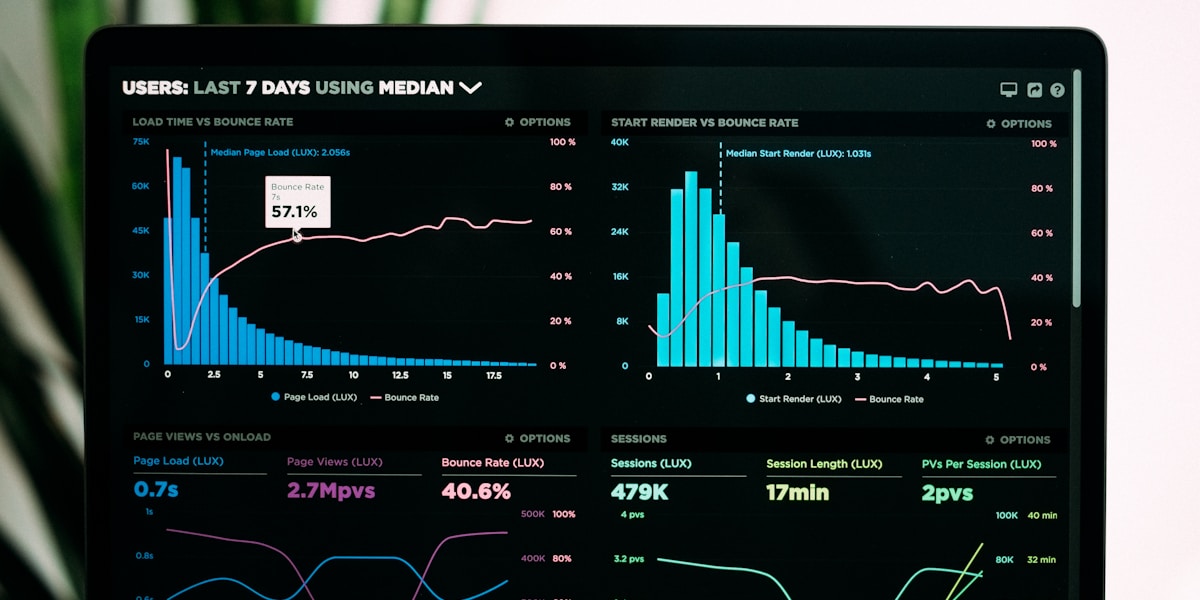
Performance Gains: Page load times dropped from 4.2 seconds to 1.1 seconds on average, with product pages loading in under 800ms. The mobile experience transformation was particularly dramatic: the mobile conversion rate surged from 1.1% to 3.4%, surpassing the original target.
Checkout & Abandonment: The streamlined checkout process reduced abandonment from 78% to 44%, recovering an estimated $4.8 million in annual revenue that would have otherwise been lost to cart abandonment.
Inventory & Operations: Real-time inventory accuracy reached 99.7%, virtually eliminating the frustrating "out of stock" experience for online shoppers. BOPIS orders grew to represent 18% of all online orders, driving valuable foot traffic into physical stores and increasing in-store upsell opportunities.
Customer Satisfaction: NPS improved from 32 to 54, with customers specifically citing the improved mobile experience, faster checkout, and reliable inventory information as key drivers of satisfaction.
Engineering Velocity: Deployment frequency increased from one deployment every three weeks to an average of 4.2 deployments per day. The development team reported a 60% reduction in time spent on infrastructure maintenance, freeing capacity for feature innovation.
Lessons Learned
Several key insights emerged from this engagement that offer valuable guidance for similar transformation initiatives:
Start with the Customer Journey: The most successful technical decisions were those grounded in customer journey insights. Mapping the complete experience before choosing technologies ensured that architecture served user needs rather than imposing technical constraints on the experience.
Phased Migration Beats Big Bang: The strangler fig approach was critical to de-risking the transition. By replacing components incrementally, RetailCo maintained business continuity while steadily improving capabilities. The first revenue improvements were visible within three months, building organizational confidence and momentum.
Invest in Observability Early: Establishing monitoring and business-aligned dashboards from day one proved invaluable. When a checkout flow issue emerged during the first major promotion post-launch, the team identified and resolved it within 12 minutes—a response time that would have been impossible with the legacy system's limited visibility.
Cross-Functional Alignment is Non-Negotiable: The project succeeded because retail operations, marketing, IT, and customer service were aligned from the outset. Weekly standups with stakeholders from all departments surfaced issues early and prevented the siloed decision-making that often dooms technology projects.
Performance is a Feature: Every 100ms improvement in page load time correlated with measurable conversion gains. Treating performance as a first-class product priority—not just a technical concern—was essential to achieving the revenue targets.
Conclusion
RetailCo's transformation demonstrates that modern e-commerce success requires more than a pretty website—it demands a fundamental rethinking of how technology serves the customer. By embracing composable architecture, real-time inventory integration, and performance-first design, RetailCo transformed their digital channel from a cost center into a primary growth engine.
The results speak for themselves: 340% revenue growth, 68% faster page loads, and a customer experience that competitors now struggle to match. But perhaps most importantly, RetailCo now operates on a foundation that can evolve with changing market conditions, giving them the agility to adapt and innovate for years to come.
For organizations facing similar challenges, the path forward is clear. The investment in modern e-commerce architecture pays dividends not only in direct revenue but in organizational capability, customer loyalty, and competitive positioning. The question is no longer whether to transform, but how quickly you can begin.


